Server Architecture
⚡ Core System & AI Architecture
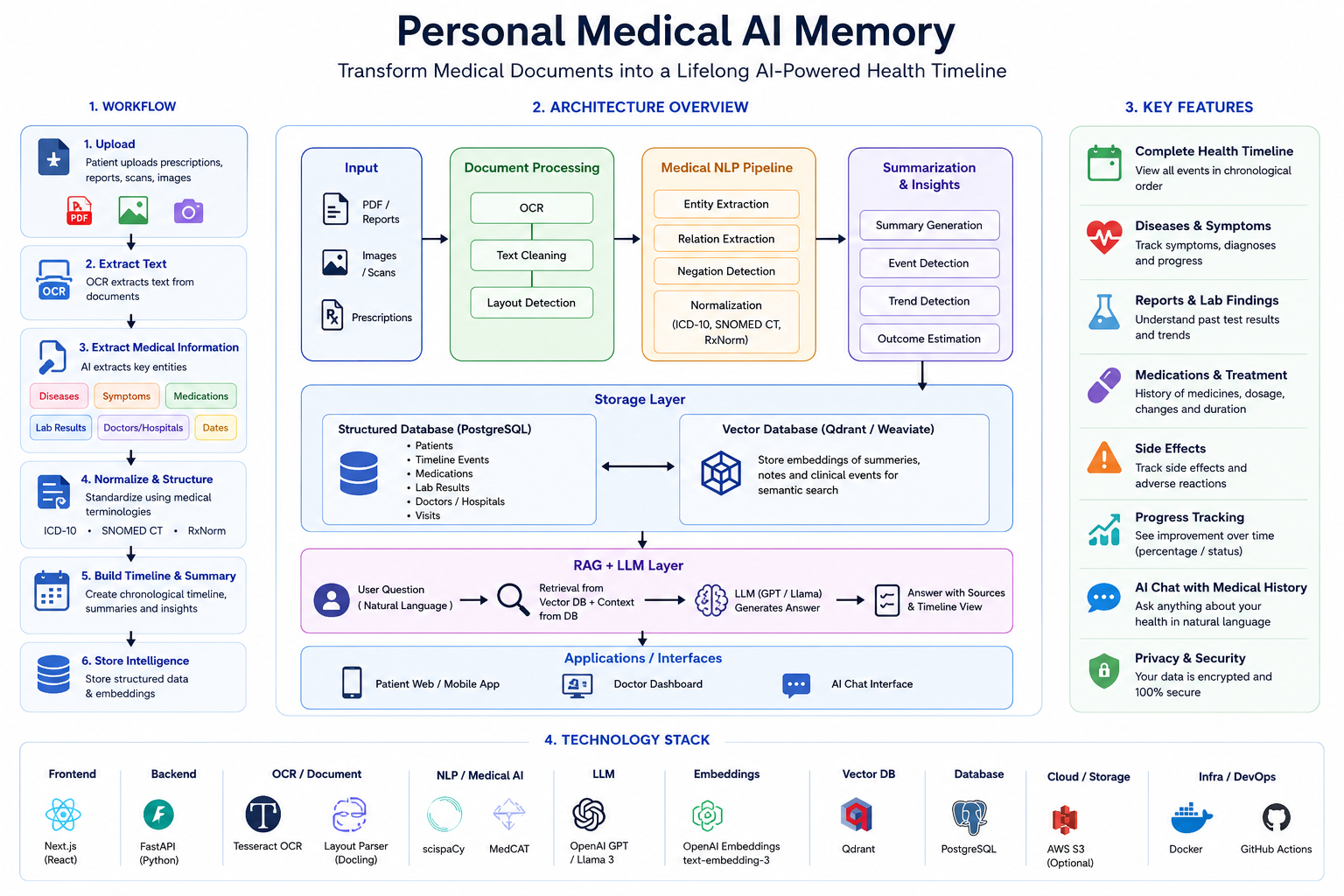
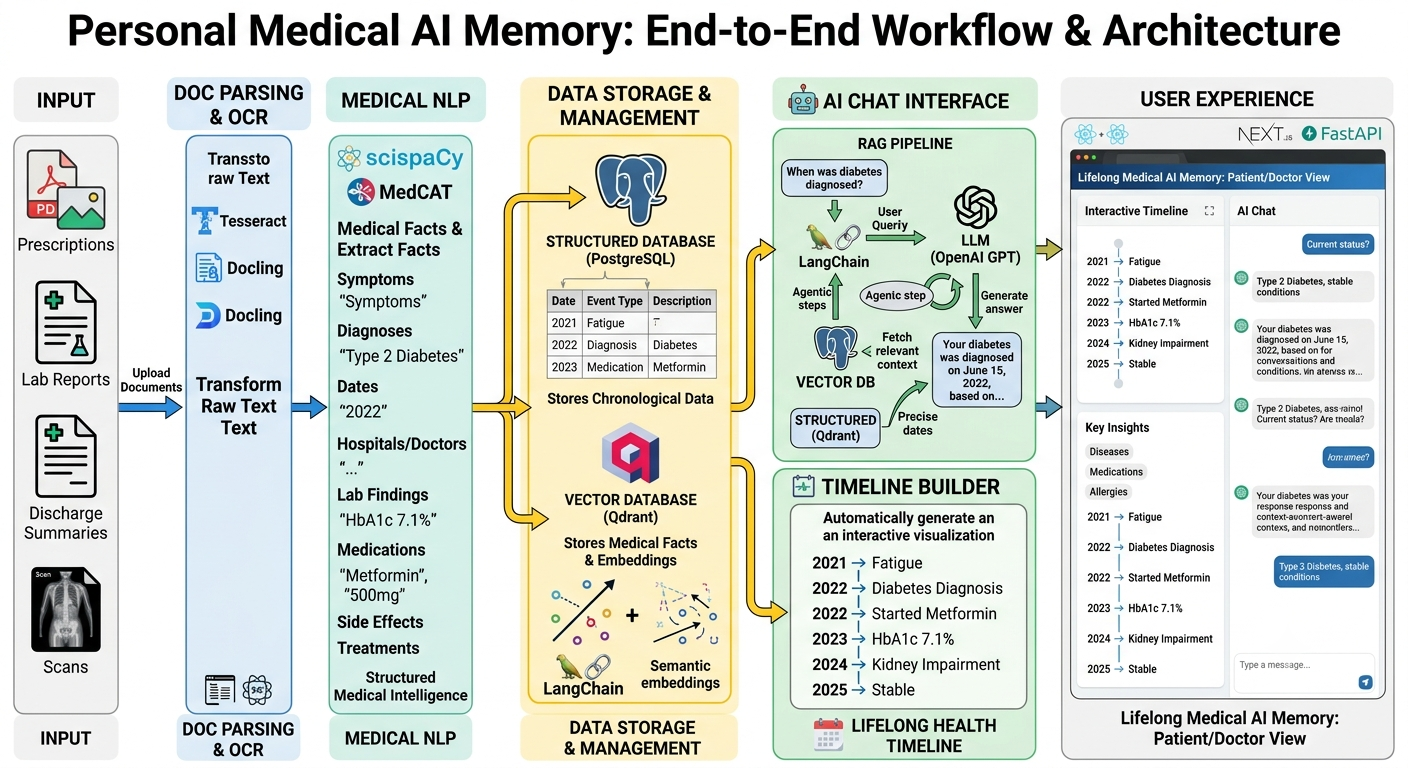
The platform transforms medical documents into a lifelong, searchable health memory using a hybrid structured-data + GenAI architecture.
Key Concepts
-
Document Intelligence: Extracts text, layout, tables, and medical information from prescriptions, reports, scans, and discharge summaries using OCR and document parsing.
-
Medical NLP Pipeline: Identifies diseases, symptoms, medications, dosages, lab tests, doctors, hospitals, and dates using medical-specific NLP models.
-
Timeline Generation Engine: Converts fragmented medical records into a structured chronological patient health timeline.
-
Structured Medical Memory: Stores normalized medical events, treatments, diagnoses, and laboratory results in PostgreSQL for accurate querying and analytics.
-
Semantic Search & Embeddings: Converts medical summaries into vector embeddings and stores them in Qdrant for semantic retrieval across the patient's entire history.
-
Hybrid Retrieval Architecture: Combines PostgreSQL (facts, timelines, medications, labs) with Qdrant (semantic medical memory) to retrieve the most relevant context.
-
Retrieval-Augmented Generation (RAG): Grounds LLM responses using retrieved patient records to reduce hallucinations and improve medical answer accuracy.
-
AI Health Assistant: Enables patients and doctors to chat with the complete medical history, generate summaries, track disease progression, analyze lab trends, and understand treatment journeys.
Architecture Images